
Monthly maintenance is your vehicle inspection

Why should I pay a monthly fee to an IT provider when my previous one just charged me by the hour when he intervened?
It's the most common question, and it's a good question. The answer is simple: because your IT in 2026 looks nothing like your IT in 2010.
In 2010, your computer broke down, you called someone, they came, they fixed it, you paid a bill. Today, your computer is permanently connected to the internet, to your email, to your clients, to your suppliers, to your bank. Every day, hundreds of intrusion attempts are automatically blocked by systems you don't see. Every week, security patches are published and need to be applied. Every month, backups need to be tested to make sure they'll work when you need them.
An hourly model typically doesn't cover any of this. The intervention happens when there's a problem. The monthly fee pays for exactly this invisible work that prevents problems from happening. It's like the vehicle inspection: you pay 200 francs every two years even though your car runs perfectly fine, because that's what guarantees it will keep running.
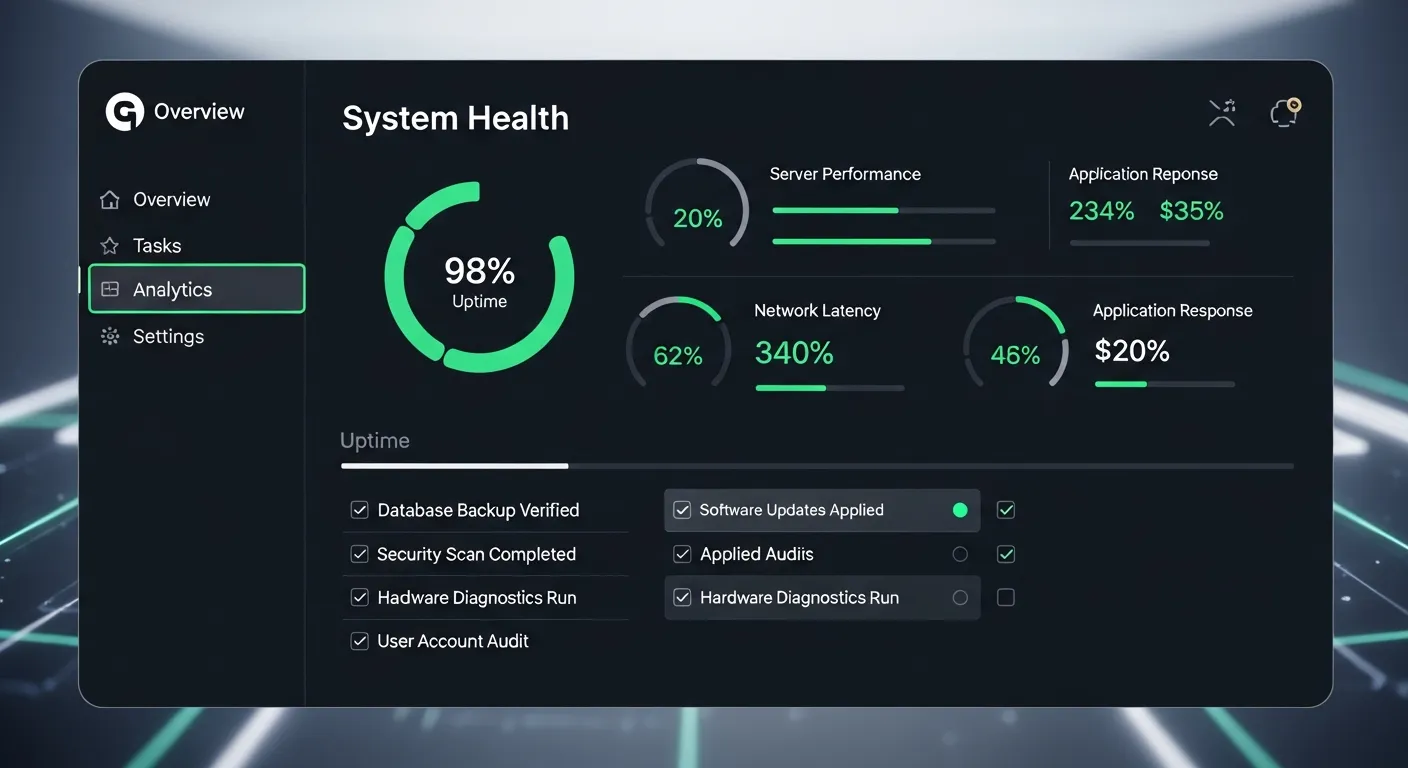
What we do when nothing happens
1,200 security alerts handled silently, 3 of which required immediate intervention
47 security patches applied to your workstations
4 backups verified and tested
28 suspicious login attempts blocked
Average monthly figures for a typical SME fleet.
The difference with time-and-materials billing
With a flat fee, you know what you pay each month. With time-and-materials, you pay less when everything is fine — but much more the month there's a problem. Over three years, factoring in the probability of a serious incident, the flat fee is almost always cheaper. And above all, it's predictable, which changes everything for running your SME.
The SLA — your insurance contract
When comparing two providers, don't just look at the monthly price. Look especially at: do they sign you an SLA? An SLA — Service Level Agreement — is a contractual document that guarantees response times. For example: "response within one hour, intervention within 4 hours, resolution within 24 hours". Without an SLA, you're buying a promise. With an SLA, you're buying a legal commitment, exactly like an insurance contract. Feel free to ask your current provider to show you their SLA — it's a good way to compare objectively.